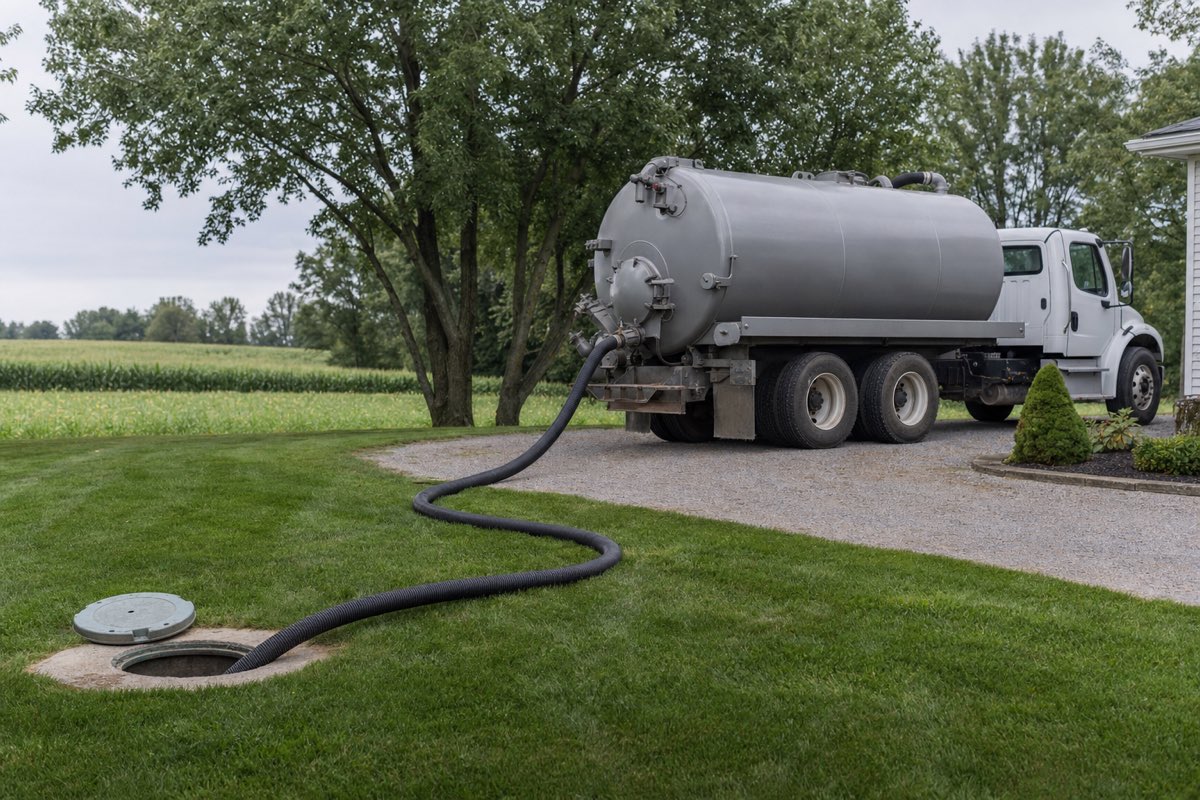
Why does pumping matter more than anything else you do?
Because pumping is what keeps solids out of the drain field, and the field is the expensive half of the system. A septic tank has one job: hold wastewater still long enough for solids to sink and grease to float, so that only clarified liquid moves on to the drain field. Every year, a family sends a surprising amount of solid material into that tank, and none of it leaves until a vacuum truck takes it away. As the sludge blanket on the bottom and the scum layer on top grow, the clear zone in the middle shrinks, wastewater spends less time settling, and solids start slipping out to the field.
That is the quiet way septic systems die in the Fraser Valley. Not with a bang, but with a few years of solids carryover slowly plugging the pores of the drain field soil. The tank is concrete or poly and nearly indestructible; the field is just soil, and once it is clogged with biosolids it does not come back. Pumping on schedule is how you make sure the cheap component absorbs the wear instead of the expensive one.
What does a proper septic pump-out include?
Both compartments emptied, sludge and scum measured, baffles and filter checked, and a written record of all three. There is a difference between "the truck came" and the tank being properly serviced. A complete visit looks like this:
- Locating and opening both lids. Two-compartment tanks are standard here, and both compartments get pumped, not just the easy one.
- Measuring sludge and scum before pumping. Those numbers are what tell you whether your interval is right, too long, or overkill.
- Complete removal of liquid, sludge and scum, with the floor of the tank washed down as needed so the gauge starts from zero.
- A look at what the empty tank reveals: inlet and outlet baffles, tees, the effluent filter if fitted, visible cracks, root intrusion and liquid level behaviour.
- Backfill and cleanup, lids reseated and sod put back so the lawn does not look like an excavation site.
- A written record of levels, condition and recommended next service date. Keep it with the house papers; buyers and their inspectors ask for exactly this.
Waste is hauled to an approved facility and disposal is included in the quoted price. If the visit turns up a problem, a broken baffle, a saturated field, a failed pump, you get told plainly what it is and what it costs to fix, and nothing more than that.
How often should a Fraser Valley septic tank be pumped?
Every 3 to 5 years for most family households, and toward the shorter end on the valley floor. The US EPA puts the general rule the same way: household septic tanks are typically pumped every three to five years. The honest interval depends on the load your tank sees:
| Situation | Typical interval |
|---|---|
| 1 to 2 people, standard tank, light use | 4 to 5 years |
| Family of 3 to 5, standard tank | 3 to 4 years |
| Large family, suite, or home business | 2 to 3 years |
| Garburator in regular use | Shorten interval by about a year |
| Pump or treatment system with maintenance plan | As your maintenance plan specifies |
A garburator deserves special mention because it roughly doubles the rate of solids entering the tank. Ground food waste does not digest away in the tank; it just becomes more sludge. On septic, a compost bucket is the better appliance.
Newer engineered systems, the Type 2 and Type 3 packages common on hard sites in this region, come with a maintenance plan under BC's Sewerage System Regulation, and that plan sets the service schedule. If you have a pump chamber, a sand mound or a treatment unit, follow the plan, not the folklore.
How do Fraser Valley conditions change the job?
High winter groundwater makes emptying a tank a judgment call, not a routine. Local ground matters. On the prairies around Sumas and Matsqui and along the low ground near the Fraser and its sloughs, winter groundwater can sit high enough to press against the outside of a tank. Pumping a tank completely empty in saturated ground carries a real risk of the tank shifting or, for some poly and fibreglass tanks, floating. Experienced operators manage this: timing, partial refill, and knowing which tanks in which soils need care. It is one of several reasons the cheapest truck on a classifieds site is not always a bargain.
High groundwater also disguises tank problems. A tank that mysteriously refills within hours of pumping in January may be taking on groundwater through a crack or a bad seal, which also means it is leaking the other way in summer. We flag that when we see it, because it is a repair conversation, not a pumping conversation.
What habits stretch the interval between pump-outs?
Control water volume, keep wipes and grease out, and protect the field surface. Five habits do most of the work:
- Watch water, not just waste. The field can only take so many litres per day. Fix running toilets, spread laundry across the week, and direct roof drains and sump discharge well away from the field.
- Only the three Ps. Pee, poo and (septic-safe) paper. Wipes labelled flushable are the single most common thing we pull out of clogged inlet tees.
- Keep grease out of the sink. Grease builds the scum layer faster than anything else and is a prime drain field clogger.
- Go easy on antibacterial cleaners and bleach. The tank is a biological process; heavy disinfectant use knocks it flat.
- Protect the field. No vehicles, livestock or structures over it, and keep thirsty trees like cedars and willows well back.
How much does a septic pump-out cost in the Fraser Valley?
$300 to $600 for a standard residential tank with accessible lids, disposal included. Typical Fraser Valley pump-outs land between $300 and $600 including disposal, with the spread driven by tank size, hose run, and digging. Buried lids that take serious excavation add cost, which is why we suggest risers to every customer who does not have them: a one-time upgrade that makes every future service faster and cheaper. You get a firm price before the truck is dispatched, and if conditions on site are different from what was described, you hear about the difference before we do the work, not on the invoice.
Frequently Asked Questions
How often should I pump my septic tank?
Every 3 to 5 years for a typical household of three or four people on a standard 1,000 to 1,200 gallon tank. Heavy water use, garburators, home businesses and suites shorten the interval; a retired couple in a large tank can often go longer. The measured sludge and scum levels at each pump-out tell you the real answer for your tank, and we record them so the next date is based on evidence.
How much does a pump-out cost?
Typical residential pump-outs in the Fraser Valley run about $300 to $600, covering pumping, disposal fees at an approved facility, and a basic condition check. Price moves with tank size, the distance from truck to tank, and whether lids need to be dug up. We confirm the price before work starts.
How do I find my septic tank lids?
Look for the spot where the main sewer line leaves the house, then follow that line 3 to 6 metres out. Lids are often buried 15 to 30 centimetres down. If you have no idea, we can locate the tank as part of the visit; installing risers afterward brings the lids to grade so no one ever digs again.
Should both compartments of the tank be pumped?
Yes. Most tanks in this region have two compartments, and both need pumping. A surprising number of tanks we visit have only ever had the first compartment emptied because a previous operator never opened the second lid. Solids left in the second compartment are the ones closest to escaping into your drain field.
Do septic additives mean I can pump less often?
No. Health authorities and the industry are consistent on this: additives do not remove solids from the tank, and some biological and chemical products actually harm the system by keeping solids suspended so they flow out to the field. Nothing replaces physically removing the sludge.
Can you pump my tank if there is a backup right now?
Yes. A pump-out is often the first response to a backup because it empties the tank and buys immediate relief, and it lets us see whether the problem is the tank, the inlet line, or the field refusing to take water. See our emergency septic service page or just call.